




Thank you for visiting our blog. We are the bridge between the reading community and you. Reach out to us if you'd like to collaborate with bookish creators.
I used to think that the only way to track books was to use an “official” method, such as Goodreads. Then I started my Bookstagram in 2019 and used that as a place to track my reading. However, neither really worked for me. I don’t always want to rate with stars, I want to see patterns in my reading, and I couldn’t always do that with Goodreads and Instagram.
So, I started a reading tracker. Now, I have tried multiple methods across the years and I will share the pros and cons of the ones I’ve tried, and what I currently do. One thing that has remained consistent is my enjoyment of having a place to track my own personal reading goals. I find the ritual of completing my trackers after finishing a book helps me cement my thoughts and feelings on the title.
If you’ve thought about moving on from Goodreads, and want to consider other ways to track your reading, read on!
In Short: How a Reading Tracker Helps Switching from public platforms like Goodreads to a personal reading tracker (such as a spreadsheet, paper journal, or StoryGraph) removes the pressure of public star ratings. It helps prevent “book amnesia”, uncovers hidden genre biases, removes guilt around DNFing (Did Not Finish) books, and turns finishing a story into a mindful ritual.
I’ve used so many types of reading tracker, and currently, I have 3 that I love. I know, that is overkill, but they all scratch different parts of my brain.
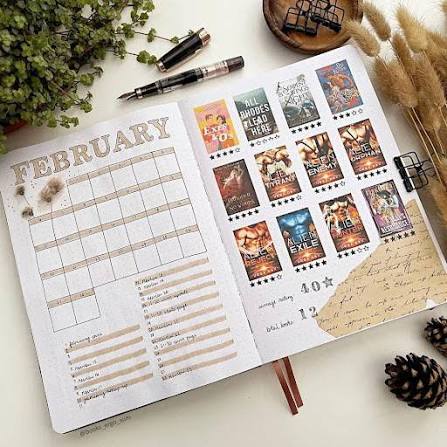
We’ve all been there. We finish a book and really enjoy it, but a couple of months later when asked why, we come up blank. “I, um, I liked the main character…and there was a dog? Or was it a cat?” For me, this “book amnesia” was greatly reduced when I started using trackers. I didn’t magically remember every characters name, but spending 5 minutes really thinking about what I specifically enjoy about a book, or which micro tropes it includes helps to cement the story in my mind. I also love pulling quotes that mean something, and decorating a review page to give me the aesthetic of the book. Plus, there is something so pleasing by flicking through my journal from last year to see what I specifically loved about a book, or comparing data in my spreadsheet from previous years.
Now look, I love Storygraph. I think it is an amazing reading tracker app. However, there is a certain amount of public performance when you share your reads on an app. Will you be judged for rating that popular book 2 stars? What if you want to keep track of something that Storygraph doesn’t? Do you bypass your goals to fit what the app wants?
A private tracker removes the audience. You can use your own rating scale. Why do we use 5 stars anyway? Why not 10? You can rate on a chilli pepper scale for romance, or stabby knives for thrillers, or dragons for fantasy. Saying this book was 8 dragons might not make sense to anyone else, but why should it?
You can also celebrate niche obsessions and track what matters to you. This year, I wanted to read more diversely. I can’t easily track that on an app, but I can in my own private spreadsheet. I also like to track micro-tropes in romance books so that I can start to drill down into what I adore about specific books. No app gives me a section for including ‘who did this to you’ or the ‘taking care of you’ trope.
This is a big one for me. I always thought that I read widely. Yes, perhaps my most read genre is fantasy, but surely it’s only just over a third of all books? Colour me surprised when I saw that over half of the books I logged this year were fantasy. While tracking apps will log genres, they often use crowd-sourced tags that include five or six sub-genres, which waters down your actual results.
I also love to look back at a year’s worth of data.My “worst” reading months for the last three years have consistently been over the summer, from June to August. Now that I know this pattern, I don’t pressure myself to read more during the summer I also know that if I read well over my average one month, the next month I tend to go into a slump and see an increase in DNFs (Did Not Finish). This tells me to slow down. I don’t need to read 15+ books a month!
Something that I want to track next year is specific reasons for DNFing books, so hopefully I can learn what I don’t enjoy so I can read more books I do enjoy!
Speaking of DNFs, I’m sure I’m not the only one who sets an annual reading goal on Storygraph or Goodreads, and then power through books at the end of the year because DNFs don’t count and I NEED to hit that goal!
Honestly, I’m pro DNF. I firmly believe that not all books are for everyone, and what I don’t like, someone else will love. But when there is a public goal and I’m 2 books away from hitting it on the 29th December, I probably will power through rather than DNF.
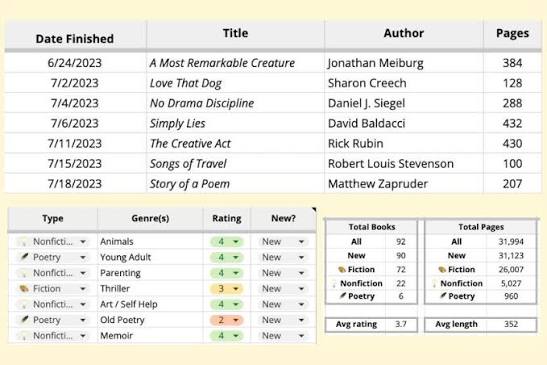
This is something that I love about my trackers. My digital tracker keeps record of DNFs. They don’t count to my annual count, but I can see how many there are, and the trends around when and why I DNF books.
Whether you read physically, digitally or via audiobooks, I think a lot of us are guilty of finishing a book, and immediately starting another. My e-reader pops up with a handy list of books I’d like to start next, my TBR (To Be Read) shelf is overflowing and there’s always another book waiting.
However, I now can’t start my next book until I update my trackers. I’ll use my digital spreadsheet to decide on a rating while the plot is fresh in my mind, and then I’ll write my review and decorate my physical journal while I’m still thinking about the characters.
Whether you’re colouring in Book Tetris, writing a review longhand, or typing data into a spreadsheet, tracking your reads allows you to take a deliberate pause and honour a story before moving on.
If you want to start your own reading tracker, go for it! Here are my top tips for getting started without feeling overwhelmed:
At the end of the day, the books you read are personal to you. Even an imperfect list of titles and scattered thoughts can turn into a brilliant time capsule of who you were at that point in your life.
Let me know your preferred tracking method in the comments below, and share if there are any surprising patterns you’ve noticed about your own reading habits!


Thank you for visiting our blog. We are the bridge between the reading community and you. Reach out to us if you'd like to collaborate with bookish creators.