






Thank you for visiting our blog. We are the bridge between the reading community and you. Reach out to us if you'd like to collaborate with bookish creators.
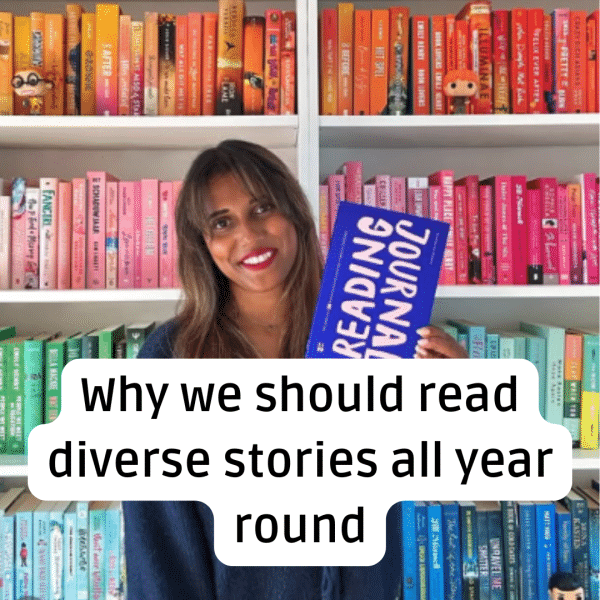
Every year, there are moments when certain books suddenly get more attention. Black History Month, Pride Month, Asian Heritage Month, and other awareness campaigns fill our feeds with reading lists and recommendations. I love discovering new books through those lists. Yet I find myself asking: why should these stories only get our attention during one particular month? Shouldn’t we all read diverse stories year round?
As a book influencer, I recommend books almost every day. Thrillers, romances, literary fiction, fantasy—if I loved it, I want other people to know about it. Books by authors from underrepresented backgrounds should be part of those recommendations all year round, not just when the calendar tells us to pay attention.
Key Takeaway: Reading Own Voices and diverse books year-round—rather than limiting them to heritage months—normalizes underrepresented experiences, broadens reader empathy, supports diverse authors commercially, and ensures marginalized characters exist across all literary genres beyond identity-struggle narratives.
One of my favorite things about reading is stepping into someone else’s world. Sometimes that world feels deeply familiar; other times, it couldn’t be further removed from my own life. We need both.
A book that reminded me of this recently was The Ocean Would Paint Me Blue by Zoulfa Katouh. The story follows seventeen-year-old Jihad, a Syrian American girl grieving the sudden death of her mother. The women in her family have magical gifts, and Jihad experiences the world through colour. But after losing her mother, all that colour disappears. An old sketchbook connected to Syria becomes a way for her to turn her grief into art and discover more about her mother’s life.
What I loved about this book is that it gave me a perspective so different from my own while still being filled with universal emotions. Grief, family, belonging, and wanting to understand where you come from sit right at the heart of the story.
It also made me realise how much I can learn about someone else’s culture and experiences simply by picking up a book I might otherwise never have discovered. And that’s one of the most powerful things reading can do. It can make something outside our own experience feel a little closer.
I don’t only want to read characters who look like me, live like me, or have experiences similar to mine. We all want books to surprise us. I want to discover places I have never visited, traditions I don’t know, family dynamics different from my own, and perspectives I hadn’t considered before.
I also love it when diversity is simply part of a book rather than the entire plot. A character doesn’t always need to struggle with their identity, a queer protagonist doesn’t always have to be in a coming-out story, and a character from a particular cultural background doesn’t always have to revolve around racism or discrimination.
Those stories are vital, of course. But readers also need diverse representation across every single genre:
Everyone deserves to be the main character without their identity automatically becoming the whole plot conflict.
The term #OwnVoices was originally created by author Corinne Duyvis in 2015 as a way to recommend books where an author shared a marginalized identity with their protagonist. Since then, the conversation around the phrase has evolved.
Organisations such as We Need Diverse Books (WNDB) have shifted away from using it as a catch-all label, partly because authors shouldn’t have to disclose private parts of their identity simply to prove they are “allowed” to tell a story. Today, many reviewers use broader terms like “diverse literature,” “marginalized voices,” or “authentic representation.”
Supporting these books isn’t about checking an author’s credentials or deciding who is allowed to write what. It’s about making space on our bookshelves for a wider range of voices while letting authors decide for themselves what they want to share about who they are.
As readers, bookstagrammers, booktokkers, and reviewers, we have more influence than we realize. Every time we buy a book, recommend it to a friend, post about it online, or request it at a library, we prove there is a commercial audience for that story.
If I discover an amazing romance by a Black author in February, I can recommend it in July. If I read a brilliant book by an Asian author in May, it can still be one of my favorite books of December. And if a queer thriller completely blows my mind, I’m going to tell you about it whether it’s Pride Month or not.
“Normalizing diverse representation in literature requires continuous engagement: reading, discussing, and recommending underrepresented authors 365 days a year, not just during designated awareness months.”
Our bookshelves become much more interesting when we make room for stories beyond the ones we already know, so read those diverse stories all year round!


Thank you for visiting our blog. We are the bridge between the reading community and you. Reach out to us if you'd like to collaborate with bookish creators.