




Thank you for visiting our blog. We are the bridge between the reading community and you. Reach out to us if you'd like to collaborate with bookish creators.
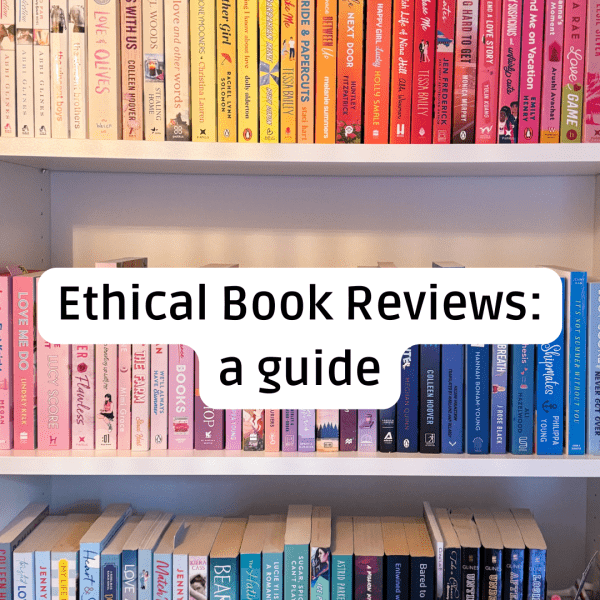
By Ana Vanessa Bettencourt De Almeida
I am deeply honored to share my personal approach to the complex world of “problematic” literature and ethical book reviews. My perspective is shaped by a life lived on both sides of the page. Known as Ana in the reviewing community and Vanessa in my creative life, I hold a Master’s in English and Portuguese Literature and a Bachelor’s in Fine Arts.
My career has been a journey of storytelling with a lot of setbacks but also character growth: I have taught literature and English in high schools, worked as a professional illustrator for publishers, and personally authored 16 fantasy and non-fiction titles, all of which I illustrated myself. Because I know the weight of the pen and the brush, I approach every book not just as a consumer, but as a fellow creator. This background helps me to inform my own approach to reviewing books ethically, and with open literary critique. Read on for the ways that I choose to review and tips if you chose to emulate my style.
In today’s discourse, “problematic” is often used as a red flag, but I see it as an invitation. A difficult subject brings different opinions to the surface. Problematic books invite conversation rather than cancellation. Good communication between parties with different ideals is essential. This is why these books make the best book club reads. They help us learn about a theme but also about ourselves.
I strive to be an eclectic, open-minded reader. Personally, I don’t believe in “cancel culture” or the banning of books. I created my platform, Therearenobadbooks, because even the clumsiest project can have a solid story at its core. Sometimes an author is too impatient to finish the “loops” of editing, or they hold beliefs radically different from their readers. As long as we are well-informed, we can turn these readings into opportunities for growth. This is why I appreciate the transparency provided by companies like Bookinfluencers.com.
Whether you receive a free copy, monetary compensation, or another benefit, be honest. Remember: payment is not for a “bought” opinion. It is to compensate you for your labor, for the hours spent reading, writing, photographing, and the investment in props, lighting, and editing.
Because I value this investment, I personally find it difficult to DNF (Did Not Finish) a book. I am a compulsive reader, finishing as many books as I can every year (a passion that keeps me sane). I always think: What if I’m missing the best part at the end? Besides, I can only form a solid opinion when I experience the whole project. Even if the lesson is simply learning “not to take that path,” it is never, in my opinion, a waste of time.
When I grab a book, I give it 5 stars immediately. Then, I take points away as I encounter elements that don’t resonate. I personally don’t need trigger warnings, but I deeply respect their necessity for others. I believe that as a reviewer, it is our responsibility to consider what content the next person may struggle with. When a book makes me uncomfortable, I report on that feeling with compassion.
If a book is unpolished, I ignore technical grammar issues to find the core plot. I provide specific feedback to help the author improve future scenes. E.g. Some chapters are missed opportunities to describe amazing action scenes, instead of getting the aftermath from the character in a less exciting exposition. Show, don’t tell.
If I realize I am not the target audience, I won’t be destructive. I will focus on the positive aspects and perhaps mention that I skimmed certain parts, or that I took notes of the advice provided by the author while still informing my viewers that those elements exist. E.g. even if I’m not a fan of open-door romance descriptions I mention where readers can find these scenes.
If a book is a struggle, and I signed up to write a review, I switch to an eBook format to hide the page count (less overwhelming) or pair an audiobook with the text version to maintain focus.

Some books stay on my shelf for ten years before the “right moment” hits. If I truly can’t finish after three attempts, I won’t review it harshly. I provide some positive aspects that may interest the right readers and some reasons that don’t resonate with me. I’ll end up dropping it in a Little Free Library for someone it might actually speak to. If I decided that I don’t want to provide any review, then I’ll reach out to the tour manager or author to explain my reasons and turn the post into a spotlight or book mail video, informing my viewers of the triggers and what to expect, positive and negative.
Sometimes, there will be a book that just does not resonate, and you have no other option than to give it a constructive, but critical review. Below is a case study example of what I would say in this scenario. This review is entirely fictional.
This project has potential. The secondary character is one of my favorites, but the plotline needs some work after the second part. I hope the author can revisit it. If you like small town stories, this one has a unique crime mystery that is solved without many plot twists. The author has some beliefs that don’t align with my social or political views.
The Artist’s Boundary: AI, Transparency, and Ethics
As a professional artist, I appreciate honesty regarding AI artwork in books. If an author is transparent about using AI, I will state that my review reflects the text alone. I usually start the review with this information. While I personally stay away from AI-generated picture books, where the art is the story, for a novel, the heart is in the words.
The most difficult “problematic” books are those where the author’s voice begins to coerce the reader. There is a balance between a character doing something inhumane (which is characterization necessary to the plot) and an author acting as a “dictator” for how the reader must feel.
Example between a character’s view and the author’s agenda.
If I encounter a book that includes some sensitive and problematic chapters that feel like a trap for a specific agenda or an attack on a group, I remain professional. I don’t mirror aggression with more of the same. I point out what was well-written, but I will warn my followers of the triggers so they can make an informed decision.
As a creator I invite all voices, because I want to have access to as many types of personalities and points of view to create credible characters in my world, but if you read for pleasure and you already learn and get enough reference from real life of antagonizing and upsetting ideals, then focus on the positive aspects that the book may still provide. It’s hard to remember the author hasn’t written the book to personally attack us, but sometimes we belong to a community or a set of beliefs that are being criticized or attacked. It’s still good to inform others of red flags. They tend to grow in our society if we don’t address them.
This is especially true for children’s books. The most “problematic” kids’ books are often the most eye-opening. They provide children with the empathy and tools to recognize a friend in distress or a secret they might be carrying. I applaud the educators who read alongside children to navigate these heavy themes together.
Words can damage, but they can also activate empathy. I don’t use my reviews to attack. I use them to inform. Even in a project that feels like a first draft, there is a human connection to be found. As a reviewer, set your boundaries. As a reader, stay curious. What is negative to one person might be the exact reason another person buys the book. By staying polite and non-destructive, we keep the door open for storytelling to do what it does best: bridge the gap between different worlds. Ethical book reviews are not about silencing stories, but about guiding readers with honesty, empathy, and care.


Thank you for visiting our blog. We are the bridge between the reading community and you. Reach out to us if you'd like to collaborate with bookish creators.